Account
Login
Cart
 Order Sample
 View Bestsellers
 Fast Delivery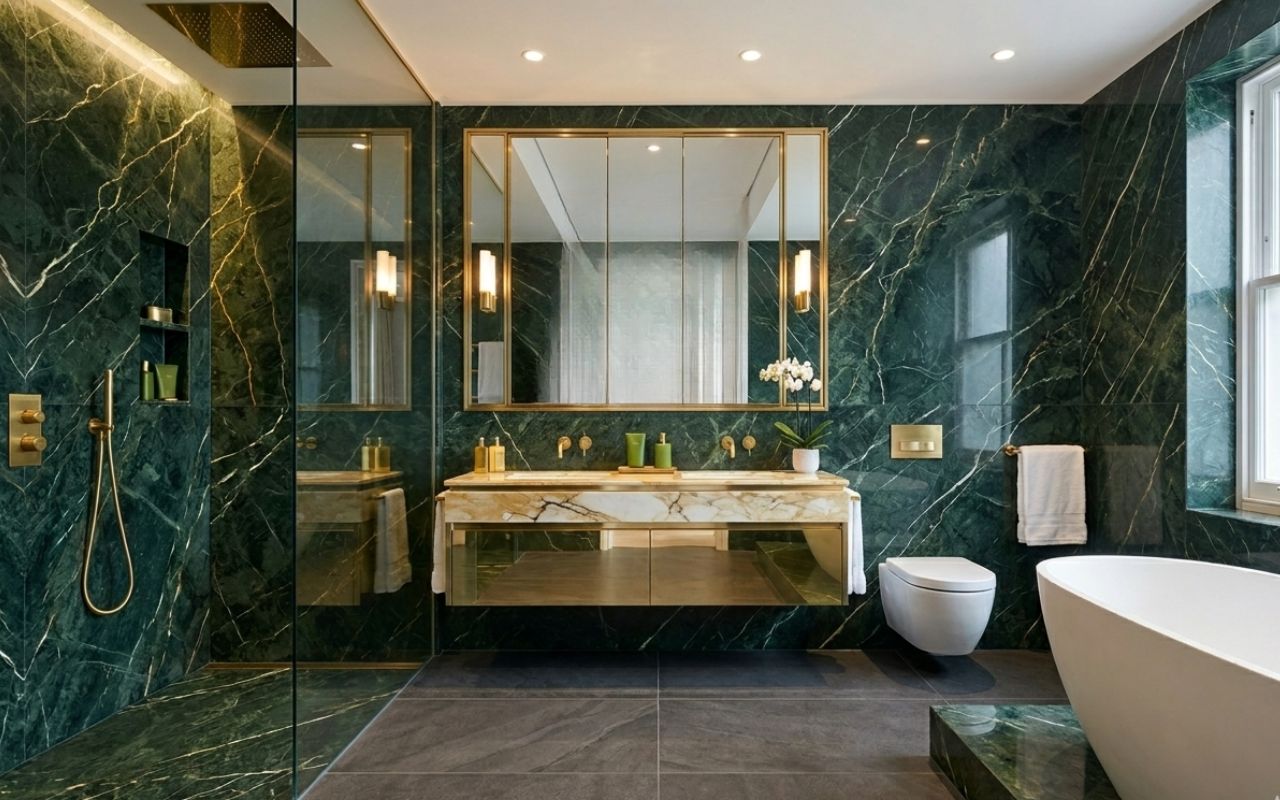
Green marble tiles – Luxury design ideas for bathrooms & kitchens
Green marble tiles bring natural luxury to bathrooms and kitchens through their rich colour and distinctive veining. Whether you choose premium natural stone from around £40/m² or opt for marble-effect porcelain at half the cost, they offer a refined, high-end look. But how do you use them to create a truly elegant interior?
Key takeaways
- Green marble tiles offer unique veining and a premium, timeless look.
- Natural marble is luxurious but requires maintenance, while porcelain is practical and long-lasting.
- Bathrooms and kitchens benefit from feature walls, splashbacks and cohesive surfaces.
- Styling should remain simple to highlight the natural beauty of the marble.
- Marble-effect tiles provide a cost-effective way to achieve a high-end aesthetic.
Why do green marble tiles stand out in interior design?
Green marble tiles stand out because no two pieces are ever the same. Their natural veining creates movement and depth, turning even simple surfaces into visual features. This uniqueness is something manufactured materials rarely replicate with the same authenticity.
Their appeal is also rooted in centuries of design heritage. From Italian palazzos to grand European hotels, marble has long been associated with prestige and craftsmanship. Green marble, in particular, adds a more distinctive and contemporary twist compared to classic white or grey Carrara.
Today, there is a strong resurgence of marble in interiors, driven by the availability of marble-effect tiles. These offer the same luxurious aesthetic at a more accessible price point, making the look achievable in everyday homes.
Types of green marble tiles
Green marble tiles come in various tones, patterns and finishes, each offering a slightly different interpretation of luxury. Some are bold and dramatic, while others are softer and more understated, making them suitable for different interior styles.
The choice often depends on how prominent you want the marble to be. Larger, more expressive veining creates a statement, while subtle patterns work better in cohesive, calming schemes. Finish and format also play a role in how the material is perceived in the room.
Understanding the different types helps you match the tile not only to your aesthetic preferences but also to the practical demands of the space.
Natural green marble tiles
Natural green marble tiles are the most premium option, valued for their authenticity and unique character. Each tile features one-of-a-kind veining, which gives surfaces a truly bespoke feel.
They are particularly effective in feature areas where the material can be appreciated up close, such as statement walls or vanity surrounds. The natural variation adds depth and richness that evolves with changing light throughout the day.
However, natural marble requires more care. It typically needs sealing and gentle maintenance, which makes it better suited to lower-traffic areas or spaces where durability is not the primary concern.
Deep green marble tiles
Deep green marble tiles create a bold, dramatic look that works well in interiors aiming for a strong visual impact. Their darker tone enhances contrast and adds a sense of depth, particularly in larger spaces.
These tiles are ideal when you want to anchor a room or create a focal point. They pair especially well with lighter elements, helping balance the intensity of the colour. For more inspiration beyond marble, you can also explore a wider selection of dark green tile options to compare finishes and styles.
Deep tones work particularly well in:
- feature walls that define the space
- larger bathrooms or kitchens with good lighting
- interiors aiming for a luxurious, high-contrast aesthetic
Used thoughtfully, they create a striking yet refined result.
Green marble tiles with a blue tint
Green marble tiles with a subtle blue undertone offer a cooler, more contemporary feel. This variation often appears slightly more polished and formal, making it suitable for modern interiors.
The blue influence softens the warmth of traditional green, creating a more balanced and diversified palette. It works particularly well in spaces that benefit from a crisp, clean aesthetic without losing depth.
These tiles are well suited to:
- minimalist bathrooms
- contemporary kitchens with sleek finishes
- interiors combining marble with chrome or steel elements
They offer a refined alternative to warmer green tones.
How can you use green marble tiles in a bathroom?
Green marble tiles can transform a bathroom into a luxurious, spa-like retreat when used strategically. One of the most effective approaches is to create a feature wall behind a freestanding bath, allowing the veining to become the focal point.
For a more immersive effect, marble can be used in a shower enclosure, especially when tiles are carefully aligned to create a continuous flow of pattern. This technique enhances the natural movement of the stone and adds a bespoke, high-end feel.
You can also create cohesion by repeating the material across key elements, such as vanity tops. For flooring, many homeowners opt for marble-effect porcelain, which provides a similar aesthetic with greater durability in wet conditions.
Are you looking for green marble tiles that would look great in your home?
Check out our bestsellers and visualise your idea in the Free Tile Visualiser!
What are the best ways to use green marble tiles in a kitchen?
In kitchens, green marble tiles can elevate everyday functionality into something far more refined. One of the most effective approaches is to extend the worktop material into the splashback, creating a seamless and cohesive look.
Another popular solution is to use marble-effect tiles around a kitchen island base, turning it into a visual anchor within the space. This works particularly well in open-plan kitchens, where the island becomes a central design feature.
For added texture, mosaics can be introduced on splashbacks, creating subtle contrast without overpowering the room. Keep in mind that natural marble requires sealing in kitchen environments to protect against stains and moisture.
If you are unsure how different layouts or finishes will look, our Free Tile Visualiser allows you to experiment with combinations before committing. This makes it easier to visualise how green marble tiles will integrate with cabinetry, lighting and worktops in your own space.
How should you style green marble tiles for the best effect?
Styling green marble tiles is about balance. Because the material already has strong visual movement, it works best when paired with simpler, complementary elements rather than competing patterns.
White is one of the most reliable choices, creating a clean and timeless contrast that allows the veining to stand out. Black, on the other hand, introduces drama and depth, particularly in more contemporary interiors.
Other effective pairings include:
- brass fittings, which add warmth and a sense of luxury;
- natural wood, which softens the overall look and introduces balance;
- neutral tones that allow the marble to remain the focal point.
It is generally best to avoid overly busy patterns nearby, as they can distract from the natural beauty of the stone.
Natural marble vs marble-effect – which option is right for you?
Choosing between natural marble and marble-effect porcelain depends on your priorities. While both offer a similar visual appeal, their performance, cost and maintenance differ significantly.
Below is a comparison to help guide your decision:
| Feature | Natural Marble | Marble-Effect Porcelain |
| Appearance | Unique veining, every tile different | Realistic patterns |
| Price | £40–£100+/m² | £25–£50/m² |
| Durability | Softer, can scratch or stain | Harder, stain-resistant |
| Maintenance | Requires sealing | Low maintenance |
| Best use | Feature areas | Bathrooms, floors, kitchens |
| Feel | Natural, premium | Practical, premium, consistent |
For many homes, marble-effect tiles offer a compelling balance of aesthetics and practicality, especially in high-use areas where longevity matters.
Conclusion
Green marble tiles combine natural beauty with timeless elegance, making them a standout choice for both bathrooms and kitchens. Whether you opt for authentic stone or a high-quality porcelain alternative, the result is always visually rich and sophisticated.
The key to success lies in thoughtful application – choosing the right shade, finish and placement to enhance rather than overwhelm the space. When used well, green marble becomes more than a material; it becomes the defining feature of the room.
FAQ
Is green marble tile expensive?
Green marble tiles can be relatively expensive, particularly natural stone options, which typically range from £40 to over £100 per square metre. The price reflects their uniqueness and premium quality.
Marble-effect porcelain provides a more affordable alternative, often costing between £25 and £50 per square metre. This makes the look more accessible without sacrificing style.
Can green marble tiles be used in showers?
Yes, green marble tiles can be used in showers, but natural marble requires proper sealing to protect it from moisture. Regular maintenance is essential to keep it in good condition.
Marble-effect porcelain tiles are often preferred in wet areas because they are more resistant to water and staining. They offer the same aesthetic with less upkeep.
Do marble-effect tiles look realistic?
Modern marble-effect tiles are highly realistic, often replicating the veining and depth of natural stone with impressive accuracy. Advances in manufacturing have significantly improved their visual quality.
How do I maintain natural green marble tiles?
Natural green marble tiles require regular care to maintain their appearance. This includes sealing the surface to protect against stains and using gentle, non-acidic cleaning products.
Avoid harsh chemicals, as they can damage the stone over time. Routine cleaning and occasional resealing help preserve the finish and colour.
What colours complement green marble?
Green marble pairs well with colours that enhance its richness without competing with its veining. White creates a classic, clean contrast, while black adds depth and drama.
Metallic finishes, particularly brass and gold, introduce warmth and elevate the overall look. Natural wood tones soften the palette and create balance.
Choosing complementary materials carefully ensures the marble remains the focal point.