Account
Login
Cart
 Order Sample
 View Bestsellers
 Fast Delivery
Bathroom Floor Tiles: Design Ideas and Practical Tips for Every Style
Bathroom floor tiles might not be the first thing people get excited about when renovating, but they are one of the most important choices you’ll make. The right bathroom floor tiles tie the whole space together, affect how safe and comfortable it feels, and play a big role in how easy the bathroom is to live with day to day.
If you are choosing bathroom floor tiles and feeling unsure where to start, this guide breaks everything down in a simple, practical way – from materials and trends to layout ideas for small and large bathrooms.
Choosing the Right Material for Your Bathroom Floor
The first thing to consider with bathroom floor tiles is material. Bathrooms are wet spaces, so floor tiles need to handle water, temperature changes, and regular cleaning without becoming slippery or hard to maintain.
Porcelain tiles
Porcelain bathroom floor tiles are one of the most popular choices, and for good reason. They are durable, water-resistant, and suitable for both small and large bathrooms. Porcelain tiles also come in a wide range of designs, including stone-effect, concrete-look, and wood-effect finishes.
Ceramic tiles
Ceramic tiles are another common option — they’re usually slightly lighter and often more affordable. Ceramic bathroom floor tiles work well in low to medium traffic bathrooms, especially when paired with good slip resistance. With green ceramic tiles currently on trend, they’re a stylish choice too. For inspiration, explore 7 Inspiring Ideas for Green Bathroom Tiles – Metro Style and Beyond.
Stone-effect tiles
Natural stone looks beautiful, but many people now choose stone-effect porcelain tiles instead. You get the natural appearance with far easier maintenance and better performance in wet areas.
When choosing materials, always check that the tile is suitable for bathroom floors and offers the right level of grip.
How to Combine Style and Functionality
A bathroom floor should look good, but it also needs to feel safe and practical. The best bathroom floor tiles balance both.
Slip resistance is key, especially in family bathrooms or en-suites used every day. Matt or lightly textured tiles usually offer better grip than high-gloss finishes.
Grout colour also matters more than people expect. Lighter grout creates a softer look but can show marks more easily. Mid-tone or darker grout is often more forgiving and easier to maintain over time.
Another important factor is tile size. Large bathroom floor tiles create a cleaner, more seamless look, while smaller tiles can offer better grip because of additional grout lines. There is no single right answer – it depends on the space and how the bathroom is used.
Bathroom Floor Tile Trends to Watch
Bathroom floor trends are moving towards calm, natural designs that feel comfortable rather than overly decorative.
Natural tones
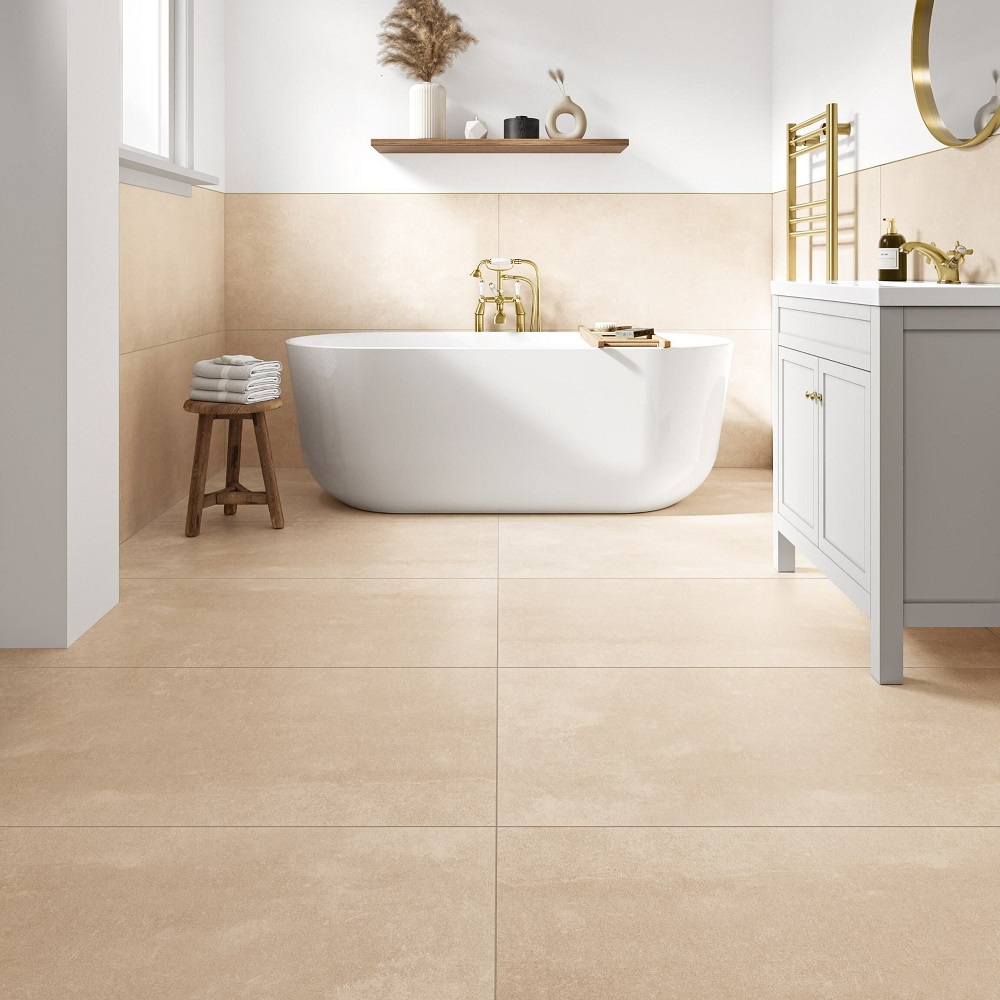
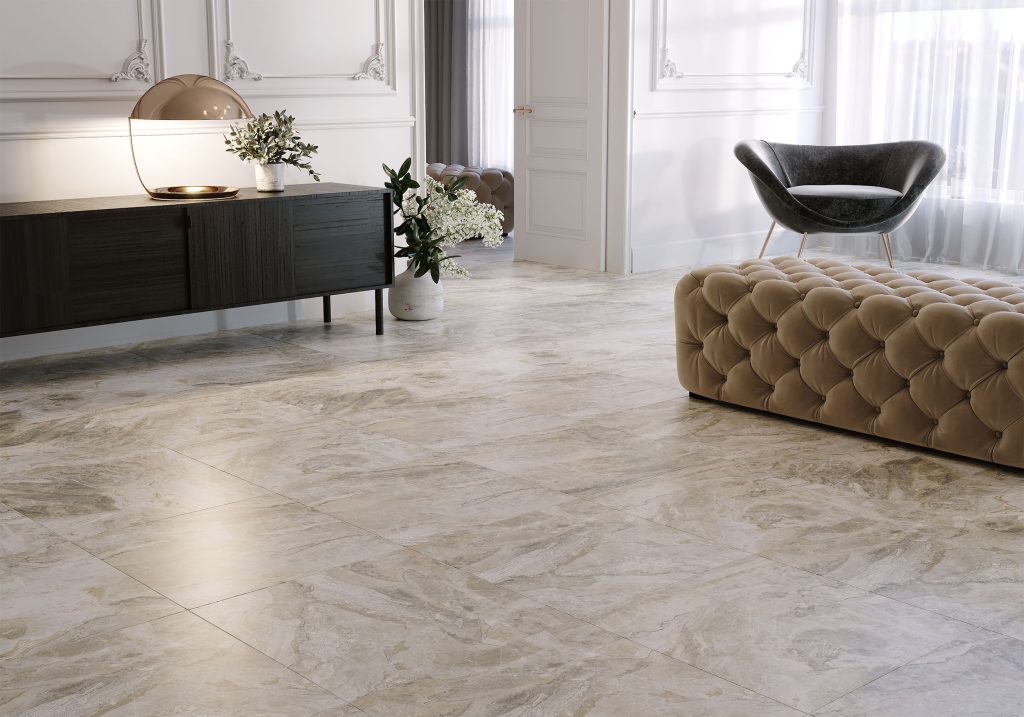
Warm greys, soft beiges, sand shades, and stone colours are very popular. These tones create a relaxed base that works with almost any wall tile choice.
Stone and concrete looks
Stone-effect and concrete-look bathroom floor tiles continue to be a strong trend. They suit modern, spa-style, and minimalist bathrooms while remaining practical and easy to clean.
Large-format tiles
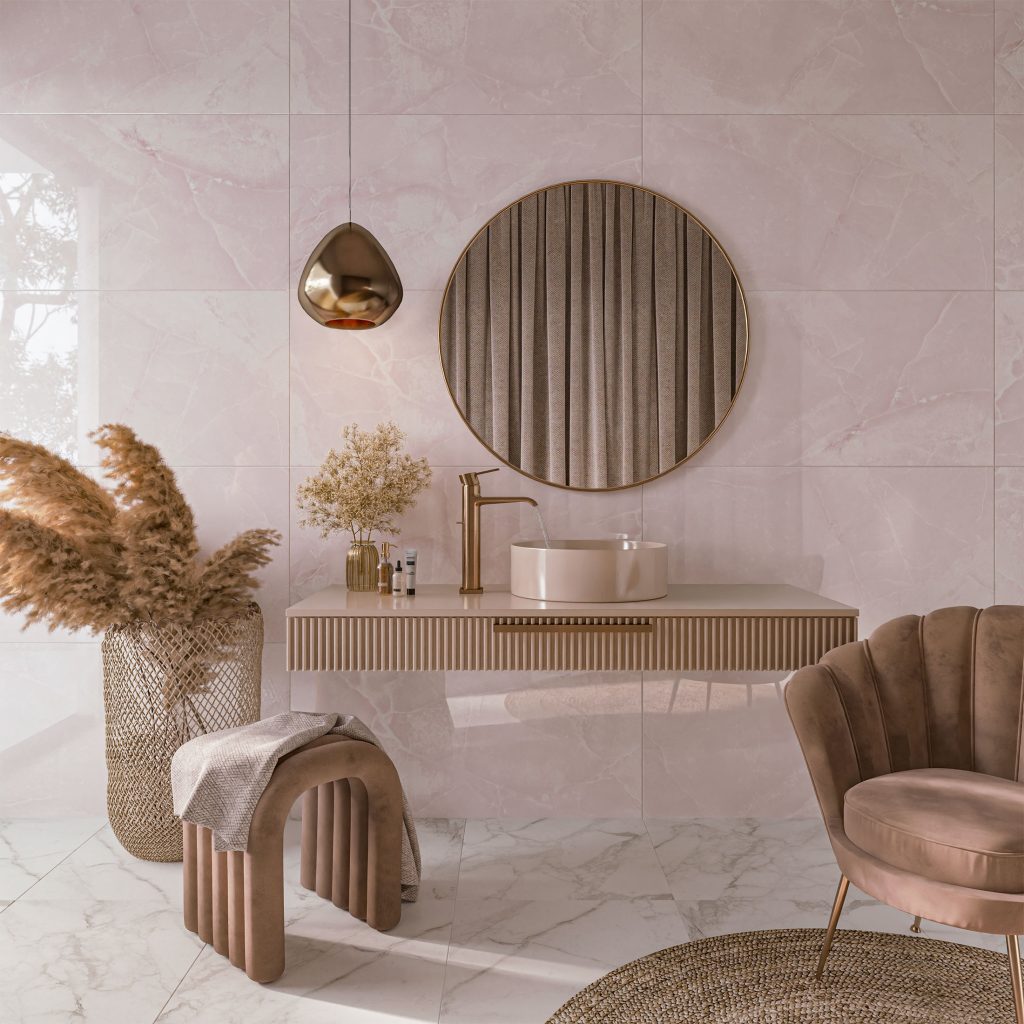
Larger bathroom floor tiles are especially popular in modern homes. Fewer grout lines create a more open feel and make the floor easier to maintain.

Subtle texture
Instead of bold patterns, many homeowners prefer tiles with gentle texture or tonal variation. This adds interest without drawing too much attention to the floor.
Design Tips for Small and Large Bathrooms
Bathroom size plays a big role in how floor tiles should be used.
Small bathrooms
In smaller bathrooms, lighter bathroom floor tiles help keep the space feeling open. Large-format tiles can work very well here, as fewer grout lines reduce visual clutter.
Using the same floor tile throughout the bathroom, including the shower area, creates a seamless look that makes the room feel bigger. Simple layouts work best, avoiding busy patterns.
Large bathrooms
Larger bathrooms give you more freedom. You can use darker bathroom floor tiles, bolder textures, or even subtle patterns without the space feeling cramped.
Zoning is also an option in larger bathrooms. You might use one tile style in the shower area and another in the main space, as long as the colours and finishes work well together.
Layout and Tile Direction Matters
How bathroom floor tiles are laid can change the way the room feels.
Straight-lay layouts feel clean and modern. Diagonal layouts can make smaller bathrooms feel wider. Rectangular tiles laid lengthways can visually stretch the space.
Keeping the layout simple usually gives the most timeless result, especially if the tiles themselves have texture or variation.
Common Mistakes to Avoid with Bathroom Floor Tiles
A few small mistakes can make bathroom floors harder to live with than they need to be.
Choosing tiles that are too slippery is one of the most common issues. Always prioritise safety, especially in homes with children or older family members.
Another mistake is selecting a floor tile that clashes with wall tiles. Bathroom floor tiles should support the overall design, not compete with it.
Finally, not ordering enough tiles can cause problems later. Always allow extra for cuts, waste, and future repairs.
Creating a Bathroom Floor That Lasts
Bathroom floor tiles are not something you want to replace often. When chosen well, they last for years and make daily life easier.
A good bathroom floor feels comfortable underfoot, is easy to clean, and works with the rest of the space rather than demanding attention.
Find Bathroom Floor Tiles at Top Ceramics
When planning a bathroom renovation, choosing floor tiles that are both stylish and practical is key. At Top Ceramics, we offer a carefully selected range to suit different interiors and everyday needs. Discover more in Bathroom Tiles: A Complete Guide to Choosing, Trends and Design.