Account
Login
Cart
 Order Sample
 View Bestsellers
 Fast Delivery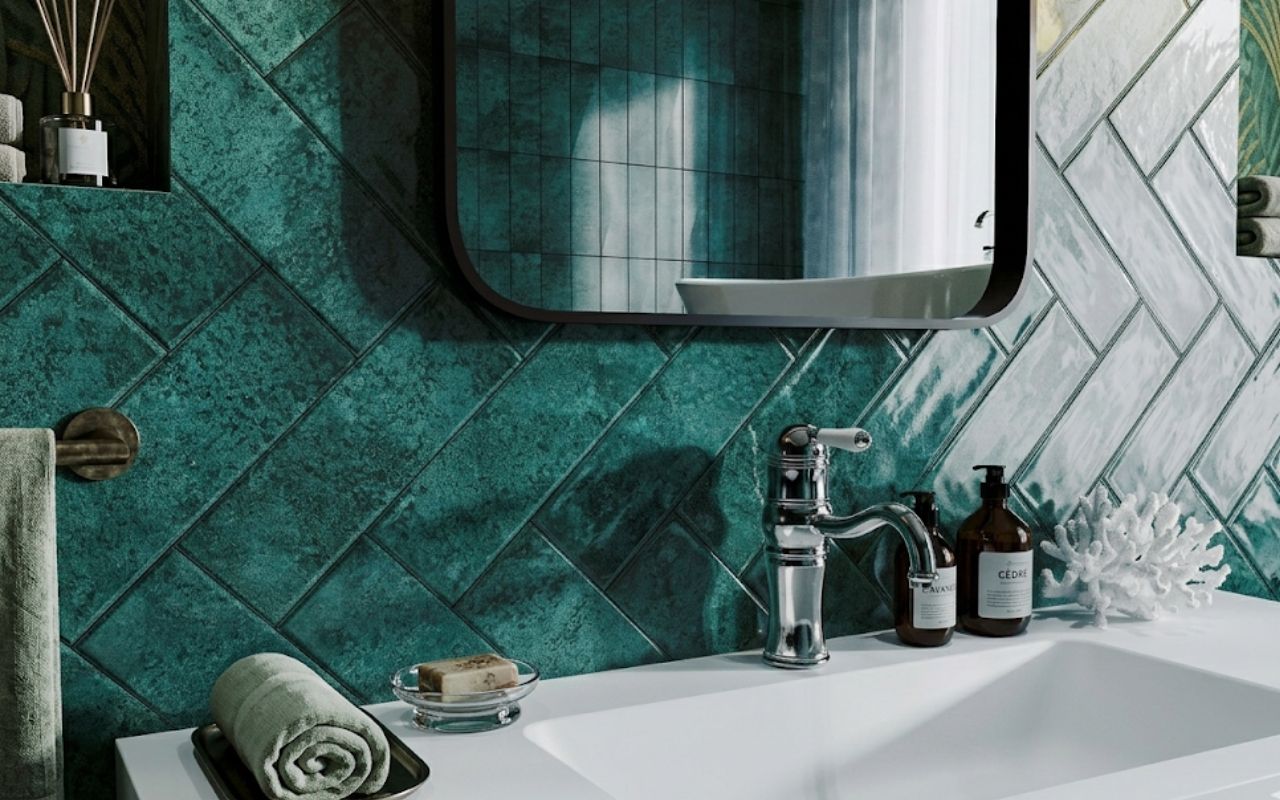
Dark green tiles – elegant design ideas for every room
Dark green tiles bring depth, drama and timeless elegance to interiors, making them a sophisticated choice for kitchens, bathrooms and living spaces. From emerald feature walls to forest green splashbacks, they create bold statements while pairing beautifully with brass, marble and wood. But how do you use them without overwhelming your space?
Why are dark green tiles such a timeless and sophisticated choice?
Dark green tiles have remained relevant for decades because they sit at the intersection of bold design and classic elegance. Unlike trend-driven colours that quickly date, deep green tones draw from nature and heritage, giving them a sense of permanence that works across changing interior styles.
Historically, dark green has strong roots in Victorian and Art Deco interiors, where richness and depth were key design elements. Today, these influences are being reinterpreted through modern trends such as colour drenching, where entire walls or rooms are covered in one tone to create a cohesive, immersive effect.
One of the biggest strengths of dark green tiles is their adaptability. They can be used in different ways depending on the desired impact:
- as a statement wall to anchor the space,
- as full-room coverage for a dramatic, cocooning effect,
- as a subtle accent when paired with lighter materials.
This ability to shift between bold and balanced makes them a reliable choice for both contemporary and classic interiors.




How do different shades of dark green tiles compare?
Not all dark green tiles create the same effect. The difference between shades lies in their undertones and intensity, which influence how they interact with light, materials and surrounding colours.
Some greens lean towards blue, creating a cooler and more formal atmosphere, while others carry warm undertones that feel softer and more organic. Choosing the right shade is less about following trends and more about aligning the colour with the mood you want to achieve.
Understanding these nuances helps you avoid designs that feel too heavy or mismatched. It also allows you to use dark green more confidently, knowing how each variation will behave in your space.
Emerald green tiles
Emerald green is the most luxurious of all dark green shades, with a rich, jewel-like quality that immediately draws attention. It is ideal for statement areas where you want the tiles to become a focal point rather than a background element.
This shade works particularly well when paired with high-end materials. Brass fixtures and marble surfaces enhance its depth, creating a refined and elegant look that feels both bold and timeless.
Forest green tiles
Forest green offers a more grounded and natural alternative to emerald. It is slightly softer and less reflective, which makes it easier to live with over time, especially in larger areas.
This shade works beautifully with organic materials such as wood, stone and linen. It creates a calm, balanced atmosphere that feels connected to nature rather than overtly decorative.
Hunter green tiles
Hunter green sits on the cooler side of the spectrum, with subtle blue undertones that give it a more formal and traditional feel. It is often associated with classic interiors, where structure and contrast play an important role.
When paired with crisp white or deep navy, hunter green creates a strong and defined look. Gold accents can add warmth and prevent the palette from feeling too rigid.
Olive (dark) tiles
Dark olive green introduces warmth and softness, making it a more relaxed alternative to deeper, cooler greens. Its earthy undertones create a welcoming atmosphere that feels less dramatic but equally stylish.
This shade pairs naturally with materials that emphasise texture and warmth, such as terracotta, rattan and warm neutrals. It is ideal for interiors that lean towards a more organic, lived-in aesthetic.
Dark green tile ideas for bathroom
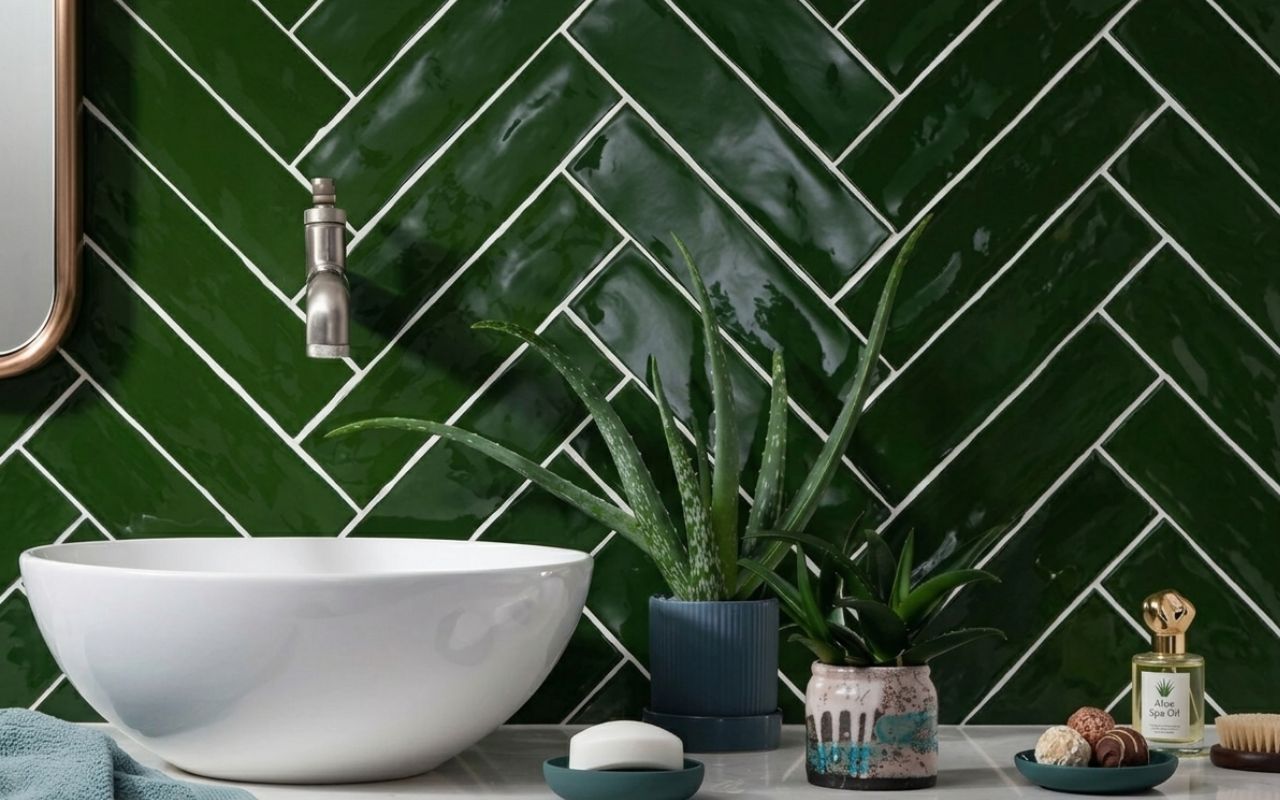
Dark green tiles can transform a bathroom into a luxurious, spa-like retreat when used with intention. One of the most effective approaches is to create a feature wall, such as an emerald backdrop behind a freestanding bath, which immediately draws the eye.
For a more immersive look, forest green tiles can be used floor-to-ceiling in a walk-in shower. This creates a seamless, cocooning effect that feels both modern and calming, especially when paired with minimal fixtures.
If you are looking for a ready-to-use solution, explore a dark green tile bathroom ideas that bring together curated options suited for different layouts and styles. Smaller details, such as metro tiles with contrasting white grout, can also introduce structure and rhythm without overwhelming the space.
What are the best ways to use dark green tiles in a kitchen?
In kitchens, dark green tiles are most commonly used as splashbacks, where they provide contrast against lighter cabinetry. Emerald subway tiles paired with white shaker units create a timeless yet distinctive look.
For a more design-led approach, consider using forest green tiles across an entire wall. Combined with brass handles and natural worktops, this creates a cohesive and elevated aesthetic that feels both modern and inviting.
Dark green can also be introduced in more creative ways:
- patterned encaustic tiles on the floor,
- tiled kitchen islands as a focal point,
- vertical layouts to emphasise height.
These applications allow you to experiment with the colour while maintaining balance in the overall design.
Can dark green tiles work in living rooms and beyond?
Dark green tiles are not limited to kitchens and bathrooms. In living rooms, they can be used to create striking focal points, particularly around fireplaces or media units.
A fireplace surround cladding in handmade dark green tiles adds texture and depth, turning a functional feature into a central design element. Similarly, large-format tiles behind a TV unit can introduce colour without clutter.
They can also work in transitional spaces such as conservatories, where dark green floor tiles help ground areas dominated by glass and natural light. This broader use shows that tiles can be both practical and highly decorative beyond traditional settings.
Would you like to use dark green tiles in your interiors?
Discover our tile collection and visualise your space with the Free Tile Visualiser!
What colours work best with dark green tiles?
Dark green tiles pair best with colours that either enhance their richness or provide contrast. Metallic accents, particularly brass and gold, are among the most effective combinations, adding warmth and a sense of luxury.
White remains a classic choice, creating a crisp contrast that prevents dark green from feeling too heavy. For more dramatic interiors, black can be introduced to create a bold, high-end aesthetic, while warm wood tones soften the overall look.
If you are unsure how different combinations will work in your space, it is worth experimenting before committing. The Free Tile Visualiser available on our website allows you to test various colour pairings and layouts in a realistic setting. You can also explore a wider range of green tiles to compare lighter and darker options side by side.
Which tile finish brings out the best in dark green?
The finish of a tile can dramatically change how dark green is perceived. Glossy tiles reflect light, intensifying the colour and creating a rich, almost mirror-like effect that works particularly well in smaller spaces.
Matte finishes offer a more subdued and sophisticated look. They absorb light rather than reflecting it, which helps create a calm and velvety surface that feels less formal but equally refined.
Textured or handmade tiles introduce variation and depth. Their uneven surfaces catch light differently, adding character and making the colour feel more dynamic.
Conclusion: Are dark green tiles the right choice for your home?
Dark green tiles are a powerful design choice, offering depth, elegance and functionality in equal measure. They can transform both small and large spaces, depending on how they are used and what they are paired with.
The key to success lies in thoughtful decisions around shade, finish and complementary materials. When these elements work together, dark green tiles feel intentional and refined rather than overwhelming.
If you are looking to create an interior that feels both bold and timeless, dark green tiles are not just a trend – they are a long-term investment in style.
FAQ
Are dark green tiles difficult to maintain?
Dark green tiles are not inherently difficult to maintain, but their finish plays a role. Glossy tiles tend to show water spots and fingerprints more easily, while matte or textured surfaces are more forgiving. Regular cleaning with appropriate products is usually enough to keep them looking their best. Choosing the right grout colour can also help minimise the appearance of dirt over time.
Do dark green tiles make a room look smaller?
Dark green tiles can make a room feel more enclosed if used without balance, but they do not automatically make a space look smaller. When paired with good lighting and contrasting elements, they can create depth rather than reduce space.
What grout colour for dark green tiles?
The best grout colour depends on the look you want to achieve. White grout creates strong contrast and highlights the tile pattern, while darker grout offers a more seamless and understated finish. Mid-grey is often a balanced choice, providing definition without being too stark. It also tends to be more practical in high-use areas. Testing grout alongside tiles is always recommended before final selection.
Is emerald green a timeless tile colour?
Yes, emerald green is considered timeless due to its rich, jewel-like quality. It has been used in interiors for decades and continues to feel relevant across both classic and modern designs.
Can I use dark green tiles on the bathroom floor?
Yes, dark green tiles can be used on bathroom floors, provided they are suitable for floor use. Matte or textured finishes are typically recommended for better grip and safety.