Account
Login
Cart
 Order Sample
 View Bestsellers
 Fast Delivery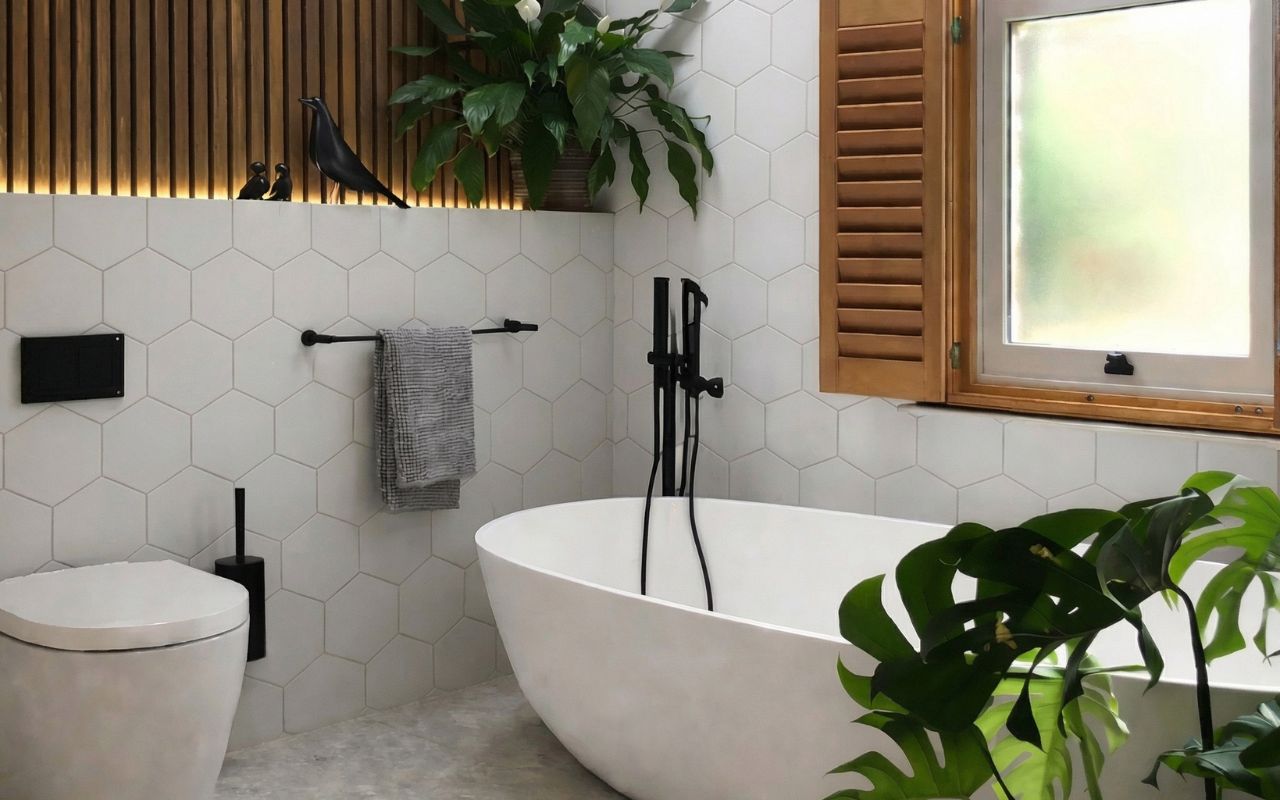
Bathroom design ideas: Inspiring tile looks for every style
Bathroom design in 2026 is all about creating spaces that feel personal, practical, and visually striking. From calming spa-inspired retreats to bold statement interiors, tiles remain the foundation of every successful bathroom design, shaping not only the look of the room but also how it feels to use every day.
The good news is that there is no single trend dominating modern bathrooms. Instead, homeowners are embracing a wider range of styles, colours, and layouts than ever before. Whether you’re renovating a compact en-suite or designing a luxurious family bathroom, the right tiles can help you achieve a timeless result that reflects your taste and lifestyle.
Key takeaways
- Bathroom design in 2026 focuses on personalisation, comfort, and timeless materials.
- Large-format porcelain tiles remain the leading choice for modern bathrooms.
- Metro tiles continue to offer one of the most flexible and enduring design solutions.
- Marble-effect tiles deliver luxury aesthetics with easier maintenance than natural stone.
- Patterned, hexagon, and terrazzo tiles are ideal for adding personality and visual interest.
- Light colours help smaller bathrooms feel larger, while darker palettes create depth and sophistication.
- Green remains one of the strongest bathroom colour trends, thanks to its calming and functional character.
- Choosing the right tile layout can be just as impactful as selecting the appropriate tile colour.
Top bathroom design styles for 2026
Minimalist modern bathroom – clean lines and large format tiles
Minimalist bathrooms continue to dominate contemporary interior design, largely because they create a sense of calm and order. Large-format porcelain tiles with minimal grout lines help walls and floors feel more seamless, making even compact bathrooms appear larger and more sophisticated.
Neutral colours remain central to this style. Soft whites, warm greiges, pale stone effects, and concrete-inspired finishes create an understated backdrop that allows quality fixtures and fittings to take centre stage.
Key characteristics of a minimalist bathroom include:
- Large-format wall and floor tiles,
- Simple colour palettes with two or three tones,
- Floating furniture and wall-mounted fittings,
- Minimal visual clutter.
The result is a bathroom that feels effortlessly elegant and unlikely to date.



Classic metro tile bathroom design
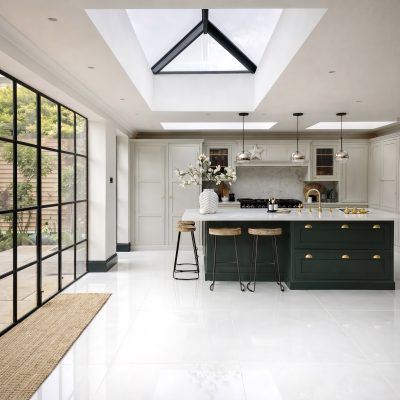
Few tile styles have stood the test of time as successfully as metro tiles. Originally used in underground stations, their simple rectangular format remains one of the most popular choices for bathrooms today.
Metro tiles can be laid in various patterns, including brick bond, herringbone, vertical stack, and basket weave. This flexibility allows them to suit both traditional and contemporary interiors.
If you’re considering this timeless style, explore our metro tiles for bathrooms collection for inspiration and practical design ideas.
Glossy white metro tiles remain a classic option, while coloured versions in green, blue, or beige offer a more contemporary interpretation without losing the timeless appeal of the format.


Maximalist bathroom with patterned and hexagon tiles
At the opposite end of the design spectrum, maximalist bathrooms celebrate colour, texture, and personality. Patterned tiles are increasingly being used to create feature walls, statement floors, and eye-catching shower areas.
Hexagon tiles are particularly popular because they introduce visual interest without overwhelming the space. Available in everything from marble effects to bold geometric patterns, they can transform even a simple bathroom into something memorable.
Popular maximalist design elements include:
- Patterned floor tiles,
- Decorative feature walls,
- Contrasting grout colours,
- Mixed tile shapes and textures.
For bold and creative designs, browse our range of hexagon bathroom tiles and discover how geometric shapes can elevate your space.




Spa-inspired bathroom with natural stone and marble effect
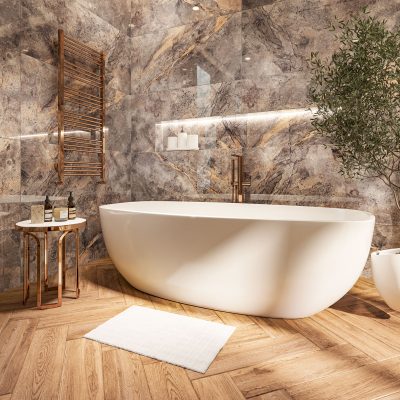
Creating a bathroom that feels like a luxury spa remains one of the strongest trends for 2026. Natural materials, soft colours, and tactile surfaces all contribute to a calming atmosphere that encourages relaxation.
Marble-effect porcelain tiles are particularly popular because they provide the elegance of natural marble while requiring far less maintenance. Large-format marble-effect walls paired with brushed brass fittings instantly create a high-end appearance.
For a luxurious yet practical solution, explore our collection of marble effect bathroom tiles and discover how marble-inspired designs can transform your bathroom.
Natural stone effects, warm lighting, and organic materials such as oak and linen complete the spa-inspired aesthetic.


Choosing bathroom tiles for your design style
Best tiles for small bathrooms
Small bathrooms benefit from tiles that maximise light and minimise visual clutter. Large-format tiles are often surprisingly effective because fewer grout lines create a more continuous appearance.
Light colours are particularly useful in compact spaces. Shades such as white, beige, pale grey, and soft sage reflect light around the room and help create a greater sense of openness.
A few practical strategies include:
- Using larger tiles than expected,
- Choosing matching grout colours,
- Limiting strong contrasts,
- Extending the same tile across walls and floors.
Together, these choices can make a small bathroom feel considerably larger.
Best tiles for large and open-plan bathrooms
Larger bathrooms offer greater freedom to experiment with colour, texture, and scale. This is where oversized porcelain slabs, dramatic marble effects, and bold feature walls can truly shine.
Dark colours often work better in spacious bathrooms because there is enough natural or artificial light to balance the richness of the palette.
Large rooms also provide opportunities to define zones through tiling. Different tile layouts or finishes can subtly distinguish bathing, showering, and vanity areas without the need for physical dividers.
Light bathroom tiles – airy and bright looks
Light-coloured tiles remain one of the safest and most sensible design choices. White, cream, soft grey, and pale beige tiles create bright environments that feel clean and welcoming.
These colours work particularly well in bathrooms with limited natural light, helping to maximise brightness throughout the day.
Light tiles also provide an ideal backdrop for introducing colour through accessories, plants, and textiles, making future updates easier and more affordable.
Dark and moody bathroom tile choices
Dark bathroom designs continue to gain popularity, especially in contemporary homes. Deep greens, charcoal greys, navy blues, and black marble effects create a sophisticated and luxurious atmosphere.
The key to success is balance. Dark tiles work best when paired with:
- Good lighting,
- Reflective surfaces,
- Contrasting sanitaryware,
- Warm metallic finishes.
When used thoughtfully, darker palettes can feel elegant rather than oppressive.
Bathroom floor design ideas
Patterned bathroom floor tiles
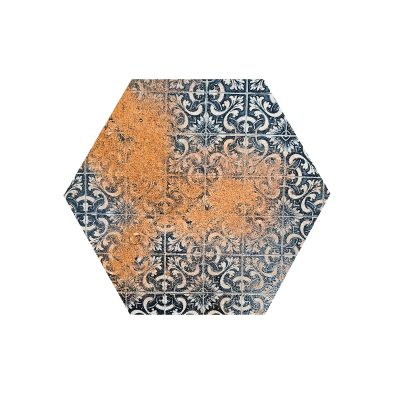
Patterned floors are an excellent way to introduce personality without overwhelming the room. Whether inspired by Victorian encaustic tiles or contemporary geometric designs, they create immediate visual interest.
Many homeowners choose patterned floors while keeping wall tiles relatively simple. This approach allows the floor to become the focal point while maintaining balance throughout the space.
Terrazzo bathroom floors – on trend for 2026
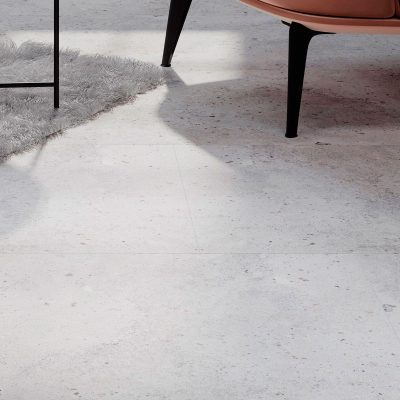
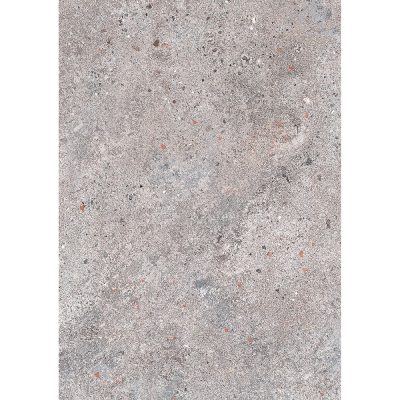
Terrazzo continues to be one of the most sought-after bathroom flooring trends. Its speckled appearance introduces texture and movement while remaining surprisingly practical.
Modern terrazzo-effect porcelain tiles offer all the visual appeal of traditional terrazzo without the associated maintenance concerns.
Available in both subtle and bold colourways, terrazzo works beautifully in minimalist and contemporary bathrooms alike.


Herringbone and geometric floor layouts
The layout of a tile can be just as important as its colour or finish. Herringbone patterns introduce movement and sophistication, making floors feel more dynamic and carefully designed.
Geometric layouts create visual interest while helping to guide the eye through the room. These patterns work especially well with wood-effect planks and elongated porcelain formats. When executed correctly, the layout itself becomes a design feature.
Beige and neutral bathroom floor ideas
Warm neutrals are replacing cooler greys in many modern bathrooms. Beige, sand, taupe, and stone-inspired floor tiles create welcoming environments that feel timeless rather than trend-driven.
Neutral flooring also provides flexibility, allowing wall colours and decorative elements to evolve without requiring a complete redesign.
Looking for inspiration? Browse our collection of bathroom floor tiles to discover functional options for every style.
Bathroom wall tile design ideas
Feature wall tiles – how to create a focal point
A feature wall can dramatically transform a bathroom without requiring every surface to be tiled in a bold design. Common focal points include walls behind freestanding baths, vanity units, or walk-in showers.
Textured surfaces, rich colours, and striking patterns all work particularly well in these locations. The key is restraint. One statement wall is often more effective than several competing focal points.
Brick effect tiles in the bathroom
Brick effect tiles offer a more textured and characterful alternative to traditional metro tiles. Their subtle surface variation introduces depth while maintaining a clean and organised appearance.
They work particularly well in industrial, contemporary, and urban-inspired bathroom designs. Combined with black fittings and concrete-effect surfaces, they create a stylish modern aesthetic.


Full-height wall tiling vs half-height with paint
Both approaches have their advantages. Full-height tiling creates a seamless and luxurious appearance while offering maximum protection against moisture.
Half-height tiling, meanwhile, can reduce costs and introduce opportunities for colour through painted upper walls. The best choice often depends on the room size, budget, and overall design vision.
Mixing wall and floor tiles successfully
Combining different tiles requires careful consideration, but the results can be highly rewarding. Contrast can add depth and character, provided there is a common element linking the designs together.
Successful combinations often share:
- Similar tones,
- Complementary textures,
- Matching undertones,
- Consistent design themes.
This creates cohesion without monotony.
Colour trends in bathroom design in 2026
Green bathroom design ideas
Green remains one of the most influential bathroom colours for 2026. From soft sage to dramatic forest green, it brings a connection to nature while feeling both contemporary and timeless.
Green works particularly well with wood, stone, brass, and neutral colours, making it remarkably flexible.
For more inspiration, read our guide 7 Inspiring Ideas for Green Bathroom Tiles (Metro Style and Beyond) and discover how different shades can transform your space.
White and grey bathrooms
White and grey schemes continue to provide a reliable foundation for bathroom design. They offer flexibility, longevity, and broad appeal while working across both traditional and modern interiors. Warmer greys are increasingly replacing cooler tones, creating softer and more inviting environments.
Black and marble bathroom looks
The combination of black finishes and marble-inspired surfaces remains a favourite among luxury bathroom designers. The contrast feels dramatic yet elegant, particularly when paired with high-quality lighting. Large-format marble-effect tiles are often used to maximise this visual impact.
Warm terracotta and beige bathrooms
Earthy tones are becoming increasingly popular as homeowners seek more welcoming and comfortable interiors. Terracotta, clay, and beige create warmth while maintaining a sophisticated appearance. These colours pair beautifully with natural wood, linen textures, and brushed brass accents.
FAQ
What tiles are best for bathroom design in 2026?
Large-format porcelain, marble-effect tiles, terrazzo designs, and natural stone effects are among the most popular choices. Green shades, warm neutrals, and textured finishes are particularly on trend.
How do I choose tiles for a small bathroom?
Focus on light colours, larger formats, and minimal grout lines. Consistent finishes and matching grout can help create a more spacious appearance.
Should bathroom floor and wall tiles match?
Not necessarily. Coordinated rather than identical tiles often create more visual interest while maintaining a cohesive design.
What is the most popular bathroom tile colour right now?
Sage green, warm beige, soft stone tones, and marble-inspired whites are among the most popular bathroom tile colours for 2026.
How much does it cost to tile a bathroom in the UK?
Costs typically range from £400 to £1,500 or more depending on room size, tile choice, and labour requirements. For a detailed breakdown, read our guide on how much to tile a bathroom.