
Account
Login
Cart
 Order Sample
 View Bestsellers
 Fast Delivery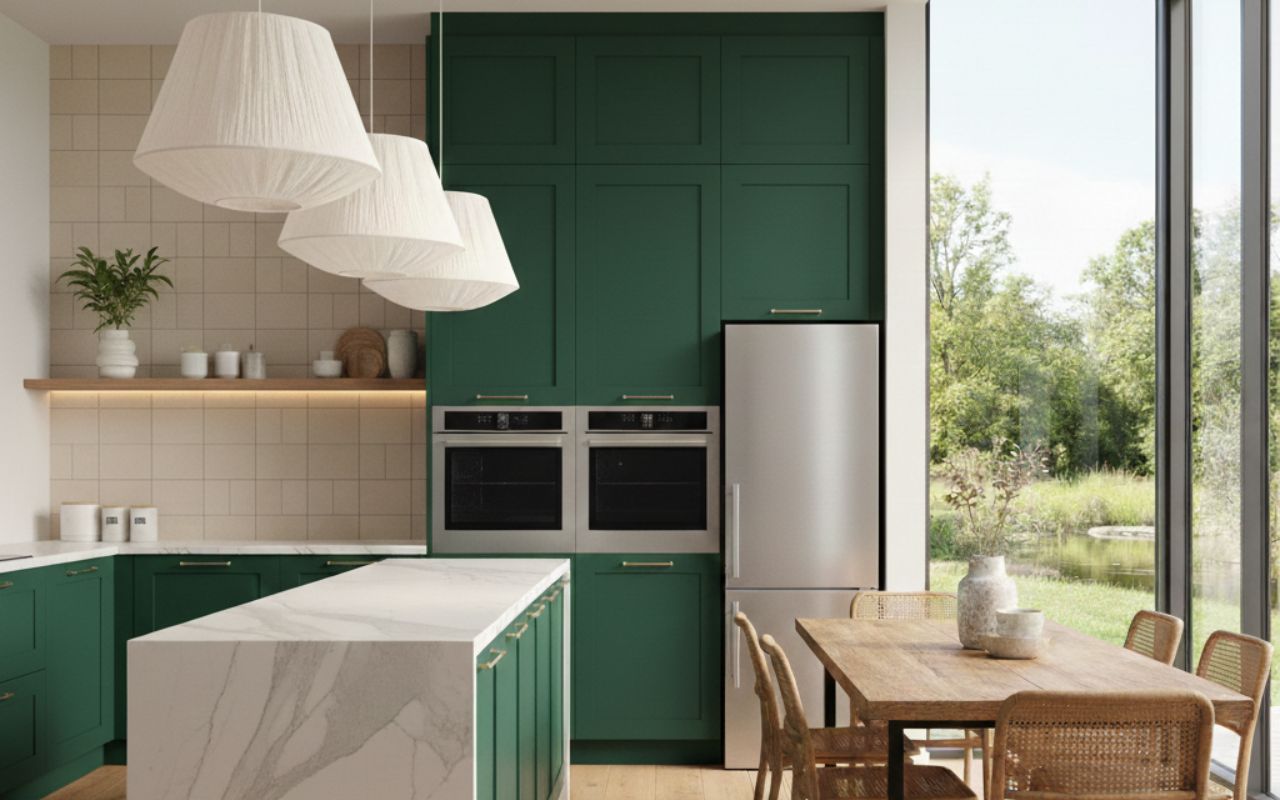
What colour tiles with green kitchen?
The best tile colour for a green kitchen depends on the shade of green, the finish and the overall mood you want to achieve. In most cases, tiles either support the cabinetry quietly or become a deliberate design counterpoint. So, should your kitchen tiles blend in seamlessly with green units, or introduce contrast that changes the entire character of the space?
Key takeaways
- The shade and finish of green cabinets should guide tile colour choices.
- Light tiles brighten spaces and work well in smaller or darker kitchens.
- Darker tiles add depth and sophistication but require balanced lighting.
- Neutral tiles remain the safest and most adaptable option.
- Practical factors such as maintenance and daily use are crucial in kitchens.
What kind of green kitchen are you working with?
Not all green kitchens behave the same way, which is why tile selection should always start with understanding the green itself. Soft sage or mint kitchens feel light and airy, while deeper tones such as forest, bottle-green or emerald bring richness and drama. The finish matters too – matt green absorbs light and feels calm, whereas glossy or lacquered green reflects light and appears more striking.
Style also plays a key role. A classic shaker kitchen in muted green invites different tile choices than a sleek, handleless kitchen in a bold emerald tone. Once the shade, finish and style are clear, tile selection becomes far more intuitive rather than overwhelming.
Should kitchen tiles complement or contrast with green cabinets?
Kitchen tiles should complement green cabinets when the aim is a cohesive, timeless look that feels calm and balanced. Choosing tiles close in tone or warmth to the green helps the cabinetry remain the focal point without visual interruption.
Contrast, on the other hand, works best when you want tiles to actively shape the design. Lighter tiles can lift darker green kitchens, while deeper or more expressive tiles can add depth to softer greens. The key is intention – contrast should feel purposeful, not accidental, and always respect the scale and lighting of the space.
Looking for the perfect tiles for your green kitchen?
Check out our bestsellers! We also recommend using our Free Tile Visualiser, where you can see how a specific model will look in your kitchen!
Which neutral tile colours work best with green kitchens?
Neutral tiles are a reliable choice for green kitchens because they allow the cabinetry to stand out while maintaining a refined, adaptable backdrop.
White tiles create a crisp, clean contrast with green units, especially in kitchens with limited natural light. They help brighten the space and work particularly well with both pale sage and dark forest greens, offering clarity without competing for attention.
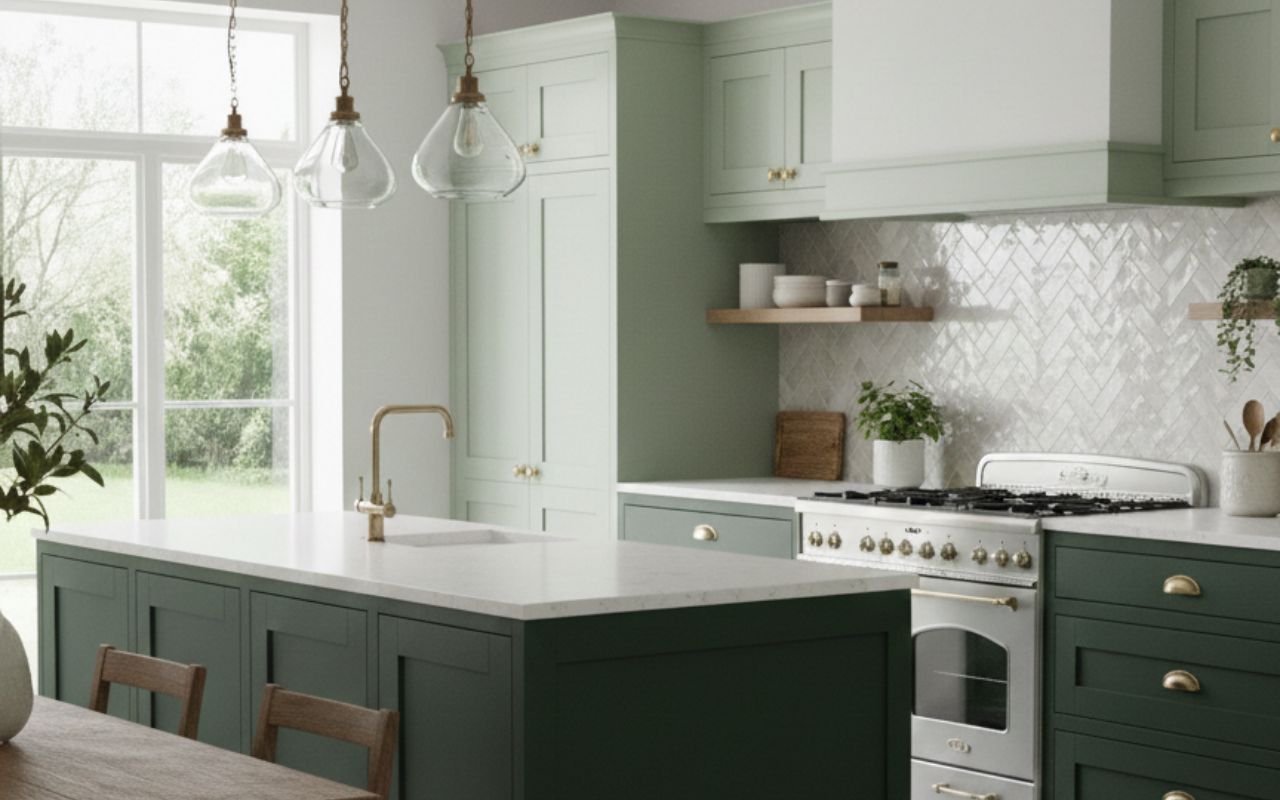
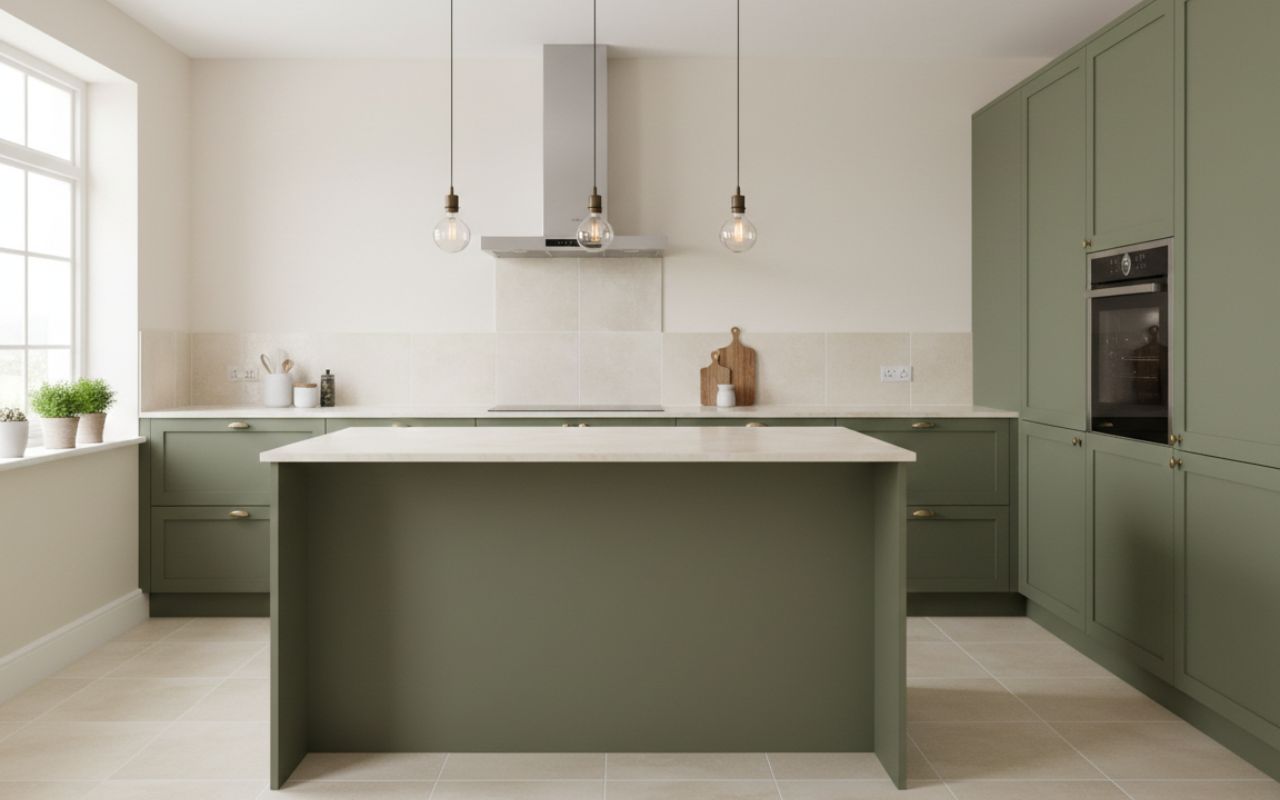
Beige tiles introduce warmth and softness, making green kitchens feel more relaxed and lived-in. They are especially effective with olive or muted green cabinets, as the shared earthy undertones create a natural, harmonious relationship.
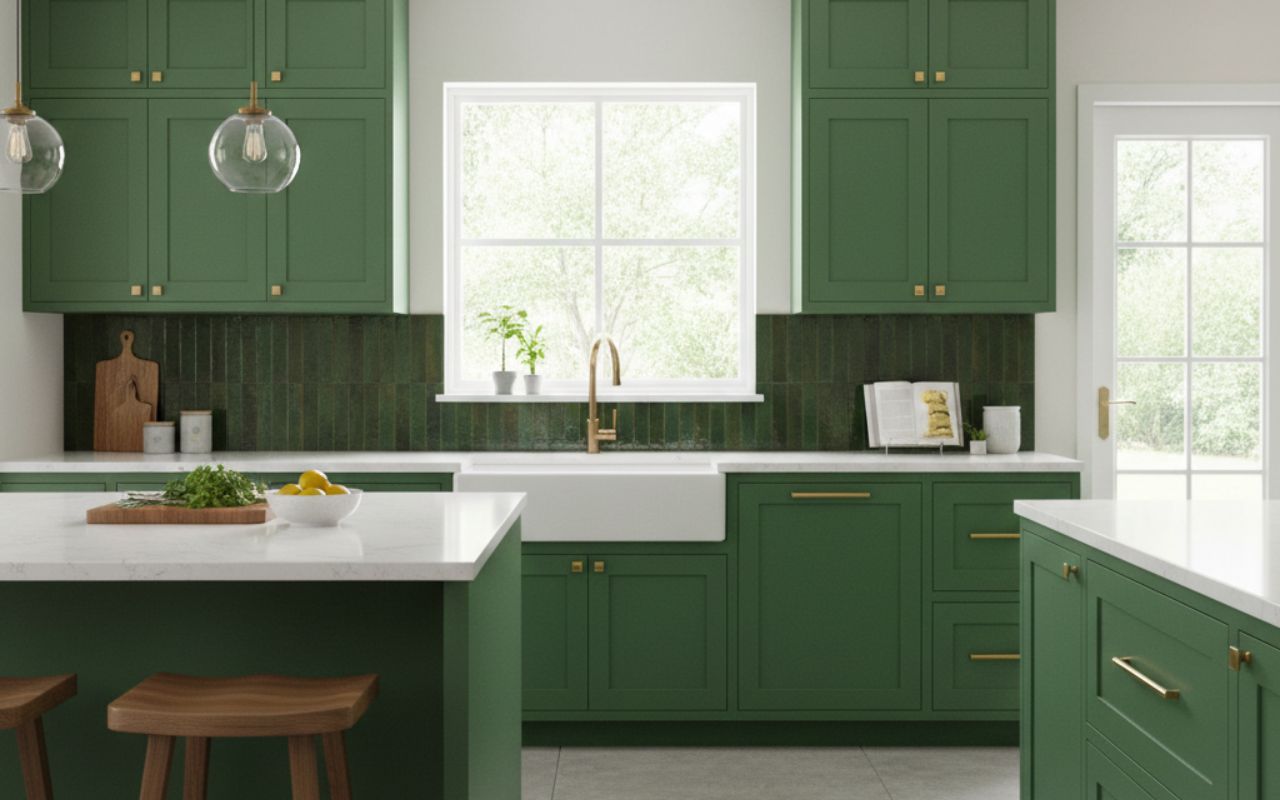
Green tiles, when chosen carefully, can extend the colour story rather than duplicate it. Using a different shade or finish from the cabinets adds depth and layering, allowing the kitchen to feel intentional and well composed rather than overly matched.
Can patterned or textured tiles work with a green kitchen?
Patterned or textured tiles can work beautifully with a green kitchen, provided they enhance rather than dominate the space. Subtle patterns or tactile surfaces add interest without overwhelming the cabinetry, particularly when the colour palette is restrained.
However, restraint is essential. Strong patterns or heavy textures work best as splashbacks or feature areas rather than across large surfaces. When used thoughtfully, they bring character and individuality; when overused, they risk competing with the green rather than supporting it.
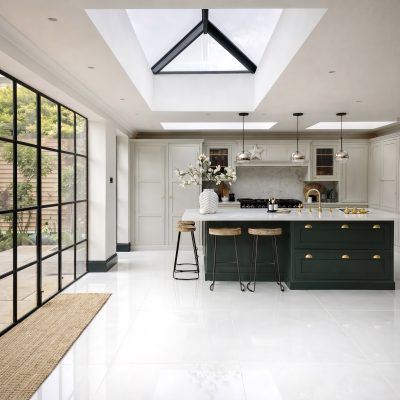


Do darker tiles suit green kitchens, or should you keep it light?
Darker tiles can suit green kitchens very well, but only when depth is balanced with light and practicality. Deep grey, charcoal or even muted dark green tiles add richness and sophistication, particularly alongside darker green cabinetry. They create a grounded, elegant look that feels intentional rather than purely decorative.
However, lighter tiles often perform better in smaller kitchens or spaces with limited natural light. They reflect light, prevent the room from feeling heavy and make daily use more forgiving, especially on floors and splashbacks.
The right choice depends on how much visual weight the green cabinetry already carries and how much light the kitchen receives throughout the day.
What practical factors should guide your tile choice?
Practical considerations are just as important as colour when choosing tiles for a green kitchen. Lighting influences how both green cabinets and tiles are perceived, often changing their tone from morning to evening. Kitchen size matters too – large-format tiles can visually expand smaller spaces, while smaller tiles add detail in more generous layouts.
Maintenance and everyday use should always guide the final decision. Kitchens are high-traffic environments, so tiles need to cope with spills, heat and frequent cleaning without losing their appearance. In this context, mid-tone tiles often strike the best balance between style and ease of care.
If you want to see how different tiles work with your specific shade of green, on Top Ceramics we offer a Free Tile Visualiser. This tool allows you to visualise your kitchen layout and test different tile options before committing, making it easier to choose tiles that truly fit your space.
Conclusion
The best tile colour for a green kitchen is never a one-size-fits-all answer. It depends on the shade and finish of the green, the mood you want to create, and how the kitchen is used daily. By balancing aesthetics with practicality and considering light, scale and maintenance, you can choose tiles that not only look right but continue to work beautifully over time.


